How You Can Apply Toyota’s Zone Control System
Sam McPherson, president, The Lean Leadership Academy
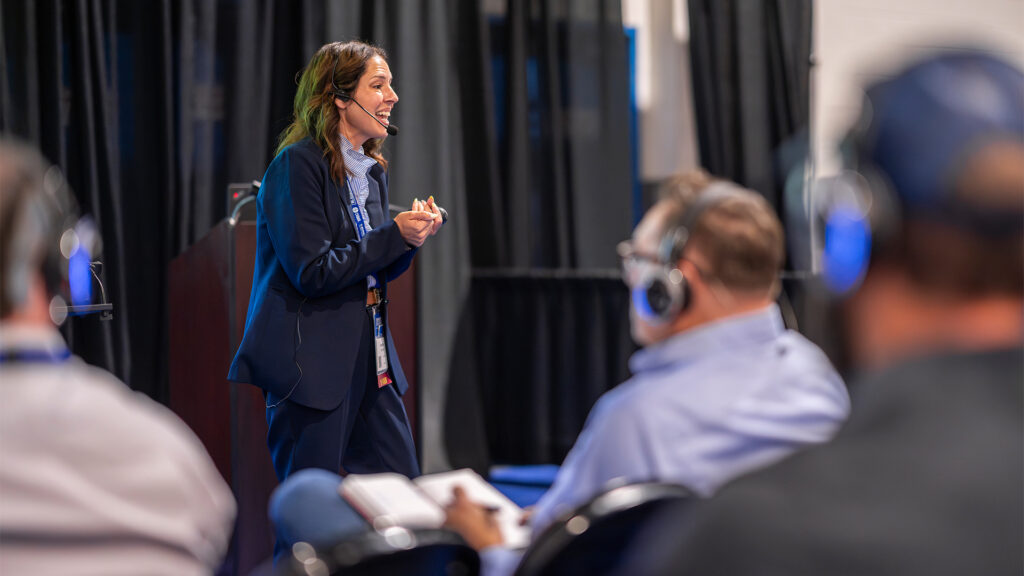
The foundation of the House of the Toyota Production System is “Stability in the 4 Ms (man, machine, methods and materials).” Zone control is Toyota’s little-understood territorial management system that provides machine-intensive operations the same breakthrough performance that cellular manufacturing provides assembly operations. Zone control is a “severe way”, but it is the method for some companies to achieve basic stability in machine-intensive operations. During this session, lean enterprise transformation sensei Sam McPherson will share how to: organize your operations for zone control; organize zone control’s “chain of responsibility”; organize the “chain of response” protocols; create zone leader roles and responsibilities; set progressive SMART goals for zones; and develop zone cadence management activities and zone leader standard work in support of zone control.
Curing the Firefighting Epidemic
David Hicks, PE, Auburn University
First-line supervisors across the country spend as much as 90% of their workday in a “firefighting” mode. Dozens of mini-disasters keep supervisors running from problem to problem, interrupted only by meetings and paperwork. Even more disconcerting is the fact that many problems are repetitive.
Hope is on the way for overloaded supervisors through proven techniques that make problems visible, stabilize the process, ensure effective training and develop improved methods. Using an integrated approach that involves workers, supervisors and technical departments, Hicks will provide a clear path for reducing defects, creating employee involvement and developing a stable basis for continuous improvement. Supervisors and managers from manufacturing, maintenance, engineering and support functions will all benefit from this proven approach.
Using Value-Added Flow Analysis to Zero in on Hidden Wastes: A case study with results
Joseph Ziskovsky, director of Operational Excellence, Johnson Screens
Value stream mapping gives you a good map of the flow, but it does not tell you what is value added or not value added in each process. VSM is system focused, a big picture, a tool designed to identify every step in an object’s path across the entire system from the moment of order receipt to final product shipment. Value-Added Flow Analysis (VAFA) is a process-focusing tool that digs deeper into specific processes or functions. It allows you to follow and document every step, every minute of time used within a process. It forces the examination of every action or step that takes place in that process. VAFA is a focused and detailed value stream map that provides a 5-foot view. Johnson Screens uses both strategies. It is a great way to flush out all of the steps in a process and then define which steps add value and which ones are pure waste. The case study will focus on how the company’s Wytheville, Va., facility, used VAFA as a core tool during multiple kaizen events to bring an operation that was in the red to double-digit profitability in less than eight months.
Policy Deployment & Lean Implementation Planning:
A 10-Step Roadmap to Successful Policy Deployment Using Lean as a System
Larry Rubrich, president, WCM Associates
Lean is most effective in helping organizations improve when it is deployed throughout the organization as a “system.” This presentation goes through the 10 steps toward integrating an organization’s goals with lean and then deploying this “system” throughout the organization. The 10 steps are:
- Mission, vision and behavioral expectations
- Organization’s goals (operating income, cash flow, revenue, ROIC, safety, etc.)
- Brainstorm opportunities to achieve goals
- Scope, value and prioritize opportunities
- Rate and validate if opportunities will achieve company goals with available resources
- Conduct a reality check
- Develop lean implementation plan
- Cascade company goals into operational metrics and develop “bowling” chart
- Problem-solving, error-proofing and counter measures
- Deployment follow-up: How to conduct monthly business reviews
Accelerate Your Results by Utilizing Lean Sigma
David Ward, director of Lean Sigma, Plexus Corporation
Learn how Plexus, a company with facilities in five countries, combined separate lean and Six Sigma tools under one guiding philosophy to lead continuous improvement globally. Successes across multiple sites will be chronicled along with challenges specific to the Electronic Manufacturing Services (EMS) industry. The Plexus approach to development and deployment will be discussed along with specifics of deployment elements, including:
- 5S – deployment and management process
- Lean flow and focused factories – from push to pull
- Value stream management – the long-term goal
- Lean Sigma health scorecard – measuring success
- Transactional Lean Sigma – Lean Sigma in the office
- Supporting organizational structure – resources and steering teams
Plexus will talk candidly about the journey and give insight into the hurdles and successes throughout development and deployment processes.
Lean’s Inseparable Link to Reliability (and Vice Versa)
Rich Hirsh, global director of Continuous Improvement, and Bill Schlegel, director of manufacturing processes and technology, Novelis
Normally when we think about the subject “reliability”, our minds conjure up images of vibration analysis, infrared thermal imaging, preventive and predictive maintenance, and scheduled work outages. In the world of lean, similarly, people often think about the tools of kaizen, pull systems, kanban and value stream mapping. In this session, the presenters will explore how reliability and lean are inseparably linked and will go beyond the discussions of tools into how Novelis is building its “renewed” manufacturing company around these systems.
Since 2002, Novelis was spun off from Alcan, acquired by Hindalco (India) and has endured the global economic downturn. During this period, the emphasis of the business has centered in the financial world, but as Novelis knows, it will be manufacturing excellence that will enable it to survive.
Improvement Initiatives Live and Die with the Leadership
Doug Wilson, Continuous Improvement manager, AbitibiBowater and Shon Isenhour, business consultant, ABB Reliability Services
Why do so many change initiatives fail to deliver long-term sustainability and the expected results? There are many underlining causes, but major improvement initiatives almost always live and die with the leadership. In this session, you'll learn the dynamics of successful and unsuccessful change and hear actual examples from various facilities and implementations to demonstrate the points. An adaptation of the Circle of Influence from Steven Covey's "Seven Habits of Highly Effective People" will be used to explain some of the leadership team dynamics that will affect your change initiative's profitability. You'll also take home the three key change elements that must be incorporated early and thoroughly to increase the probability of your success.
Why and How to Go Beyond Lean Six Sigma and the Balanced Scorecard
Forrest W. Breyfogle III, chief executive officer and president, Smarter Solutions
In this session, you'll learn the best practices, common usages, advantages and issues in lean, Six Sigma and the use of the balanced scorecard. The relationship to business improvement efforts and Lean Six Sigma is built in a scenario called Integrated Enterprise Excellence (IEE). The IEE system combines the best practices of earlier tools and methods like Lean Six Sigma with innovative analytical techniques to drive financial and operational success at the enterprise level and achieve the three R's of business; i.e., everyone doing the Right things and doing them Right, at the Right time.
Transform Your Company through Operational Excellence
Bill Kimbro, director, Lean Enterprise Office, Kennametal Inc.
Operational Excellence is a business condition desired by many executives. The journey a business takes toward this condition is one that requires a new age of leadership. Leadership begins by creating a safe environment that encourages employees to become leaders and leaders to become teachers and share learning through gemba walks. This discussion will be a reflection of lessons learned during Kennametal’s 12-year journey toward Operational Excellence, reviewing our road map, and distinguishing what has and has not worked.
Lean at Wausau Paper – A Comprehensive Case Study
Terry A. Olson, process improvement manager, and Jennifer Castle-Alcorn, continuous improvement/TNT team lead, Wausau Paper
In this informative case study session, the presenters will share how and when they got started with lean implementation at Wausau Paper. They will share what they have done, the accomplishments that have been made and how they have used lean tools in areas other than operations. They will also explain how Wausau Paper has incorporated lean into its cost-savings efforts and outline the barriers that have been overcome.
Impact Your Company’s Bottom Line by Improving Process Changeovers
Andrew Boger, lean manager, NSK Corporation
It's time to get back to the basics and focus on eliminating the waste in our manufacturing facilities. The current state of our economy makes an effective lean strategy more important than ever. You could internally bail out your company during this financial crisis by eliminating wasted time during process changeovers. Time that is lost during a changeover is time that will never be recovered, and could be costing your company thousands of dollars ... dollars that could ultimately improve your company’s overall bottom line and profitability. In this case study, you will learn how to overcome common challenges related to excessive changeover times by creating a systematic approach for standardizing changeover procedures, organizing changeover tooling, monitoring changeover times and improving changeover times.
Accelerating MRO Continuous Improvement: Keys to Reducing Cost, Eliminating Waste and Adding Value
Kevin A. Hartler, W.W. Grainger
For most organizations, continuous improvement efforts originate in manufacturing- or production-related departments and are frequently associated with formal initiatives such as Six Sigma, lean manufacturing and/or Total Quality Management. However, increasing pressures to minimize expense and maximize effort at every level of an organization have driven the philosophy of continuous improvement into the area of maintenance, repair and operations (MRO). MRO supports an organization’s primary activities by insuring its facilities, equipment and personnel perform at the optimal level of operations.
Research conducted by Grainger indicates MRO offers a considerable opportunity for cost reduction, waste elimination and risk mitigation. But adoption of a continuous improvement philosophy within MRO is challenged by the unique nature of material needs and process complexities. Organizations seeking to accelerate continuous improvement within MRO must ensure individual efforts utilize an approach capable of achieving the desired benefits.
How to Use Lean Six Sigma to Rapidly Deliver Bottom-Line Impact
Sandy Klaasse, president, Dynamic Business Solutions
Why do you and other organizations pursue lean manufacturing and Lean Six Sigma? It’s certainly not about the pursuit of the “perfect lean process”; it’s about driving improved bottom-line performance for your business. And in today’s challenging economy, more than ever, you need to rapidly deliver sustainable bottom-line results!
How do you ensure that your Lean Six Sigma efforts are aligned with the strategic goals of the organization? How do you ensure that you are tactically executing with Lean Six Sigma principles to enable those goals to be achieved? And, how do you make sure that you are improving the right metrics, at the right pace, to deliver your business goals? This presentation will provide proven strategies for utilizing Lean Six Sigma tools and methodologies to achieve strategic business objectives and, most importantly, how to rapidly deliver sustainable bottom-line impact for your organization.